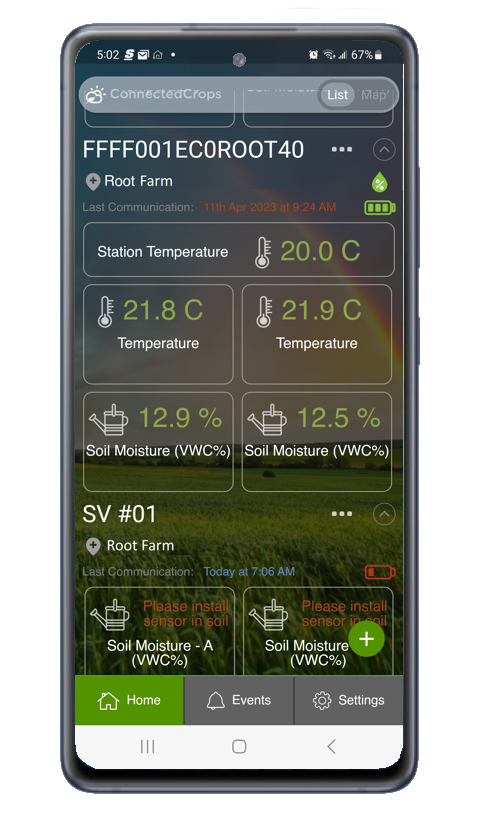
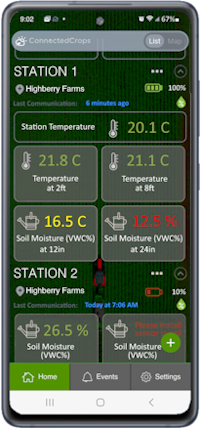
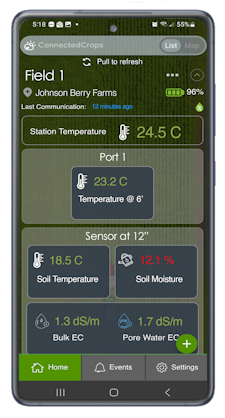
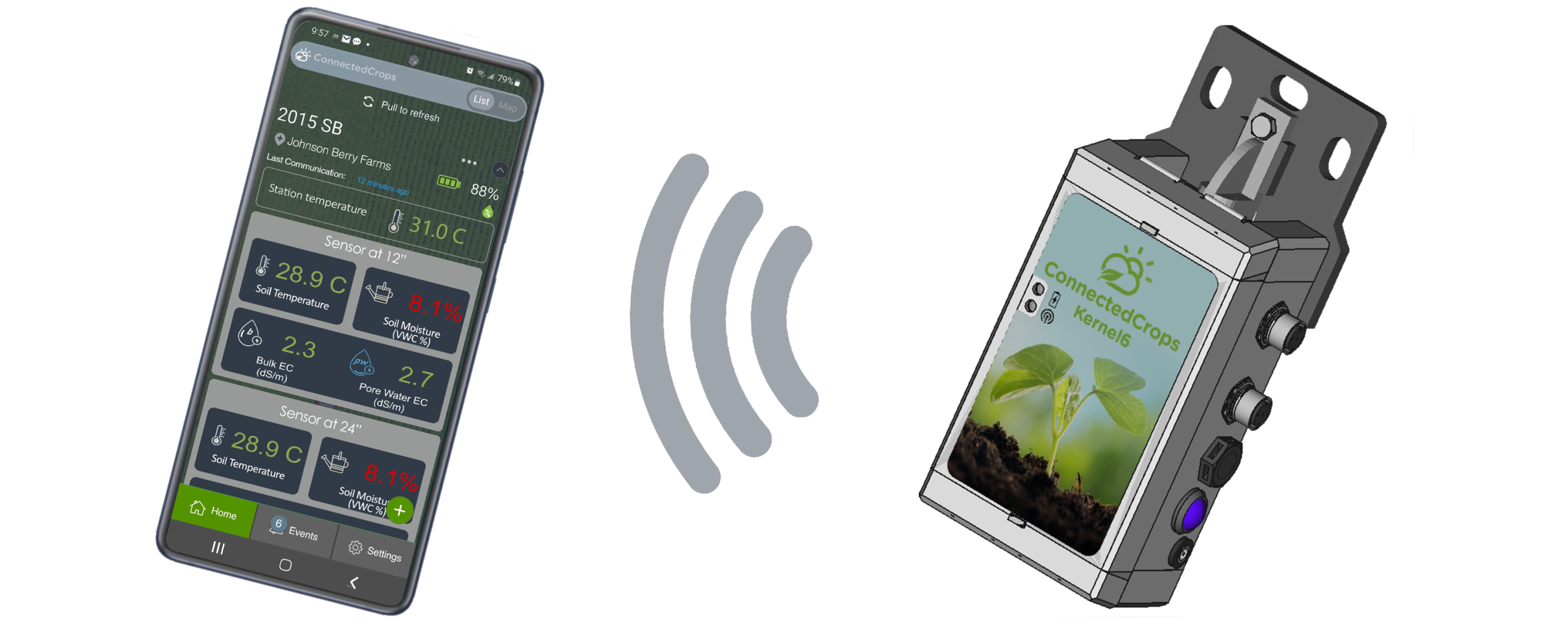
Soil Moisture, Soil Temperature & Electrical Conductivity Sensors provide a comprehensive view of soil conditions. Water and nutrients are used most efficiently when irrigation supplies only the amount of water the crop needs and the soil can retain.
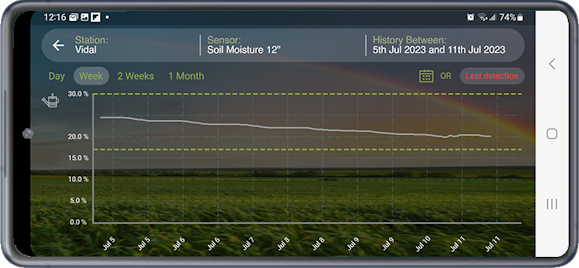
By installing sensors at different depths, growers can monitor how water moves through the root zone and helps evaluate water infiltration, percolation, drainage, and potential runoff. This allows a grower to determine when irrigation is needed, how much to apply, and when to stop.
Monitoring soil temperature provides valuable insight into root-zone conditions and crop development. Electrical conductivity measurements can help identify changes in soil salinity and nutrient availability, providing another important indicator of soil conditions.
Every field is different, with variations in soil texture, structure, drainage, crop type, and water-holding capacity. Soil sensors take the guesswork out of irrigation and soil management by providing accurate, real-time measurements throughout the soil profile—from clay to sand.
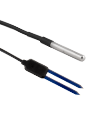
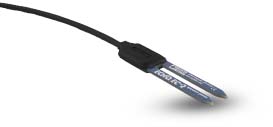
The <strong>A05 Soil Sensor</strong> is an economical sensor solution that provides accurate soil data in the standard soil types that are suitable for agriculture.
Precision: Operating Range: -40°C to +60°C
Soil Temperature: 0.1°C
Soil Moisture: 0.1%
Electrical Conductivity: 1 µs/cm
Accuracy: Soil Temperature: ±0.5°C across the standard operating range
Soil Moisture: ±2% in the typical 0–50% VWC range. ±3% in saturated or heavy soils (50–100% VWC)
Electrical Conductivity (EC / Salinity): ±3% Full Scale (F.S.) within the standard 0–10,000 µs/cm range. ±5% Full Scale (F.S.) when pushed to high-salinity limits (10,000–20,000 µs/cm)